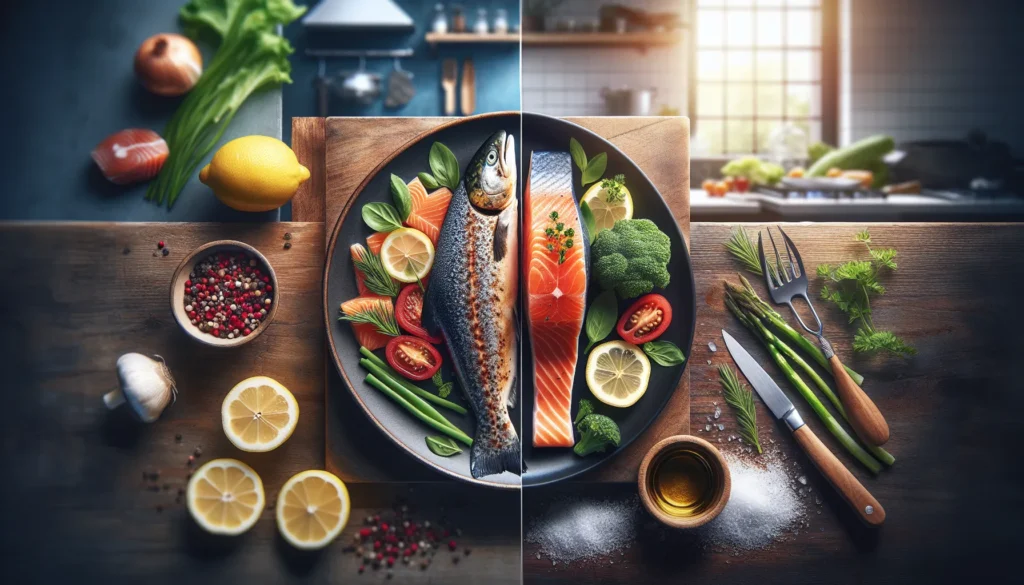
When it comes to seafood, few debates are as heated as trout versus salmon. We often find ourselves caught in the net, pondering which fish offers superior nutrition. Is it the flaky, tender trout that wins our hearts, or the rich, flavorful salmon that claims our taste buds? Let’s jump into the depths of their nutritional profiles and tackle this delicious dilemma with a splash of humor and a sprinkle of knowledge.
Nutritional Profile Overview

Calories and Macronutrients
We start by examining the nutritional profiles of these two fish. On average, a 3-ounce serving of grilled salmon contains about 206 calories, while trout comes in slightly lighter at around 168 calories per serving. It’s easy to see why both options are popular among health enthusiasts.
In terms of macronutrients, salmon boasts around 22 grams of protein, while trout typically offers around 20 grams. Not a huge difference, but hey, every gram counts when we’re counting macros. Both fish are low in carbs, making them excellent options for anyone watching their diet.
Vitamins and Minerals
Now, let’s not forget about the vitamins and minerals. Salmon is rich in Vitamin B12, which is crucial for our brain and nervous system, along with Vitamin D, helping our bones stay strong. Meanwhile, trout is no slouch either: it provides plenty of niacin and phosphorus. Both fish deliver a punch of selenium, an antioxidant that plays a vital role in our health. It’s a tie in the vitamin department, as each offers unique benefits.
Fat Composition
Omega-3 Fatty Acids
Ah, the good fats. We can’t have a discussion about fish without talking about omega-3 fatty acids. Salmon takes the lead here, offering about 2,260 milligrams per serving, while trout offers around 1,000 milligrams. These heart-healthy fats are linked to numerous health benefits, including improved heart function and decreased inflammation. Who doesn’t want that?
Saturated and Unsaturated Fats
When it comes to other fats, both fish are relatively low in saturated fat, which is great for our heart health. Trout tends to have a slightly higher proportion of unsaturated fats, contributing to its lean profile. It’s a friendly fat rivalry, but salmon’s omega-3 content gives it a delicious edge.
Health Benefits Compared

Heart Health
Let’s talk heart health. Both trout and salmon are excellent for maintaining a healthy heart, thanks to their omega-3 fatty acids. Studies suggest that regular consumption of these fish can lower the risk of heart disease. But, salmon’s rich omega-3 content gives it a slight advantage in terms of cardio protection.
Muscle Growth and Recovery
For those of us who love a good workout, protein is key. Both fish are excellent sources of high-quality protein, aiding muscle growth and recovery post-exercise. We can confidently say that either choice will enhance our gains, but salmon might be just a smidge better due to its high omega-3 content, which helps with inflammation and recovery time.
Sustainability and Environmental Impact
Farm-Raised vs Wild-Caught
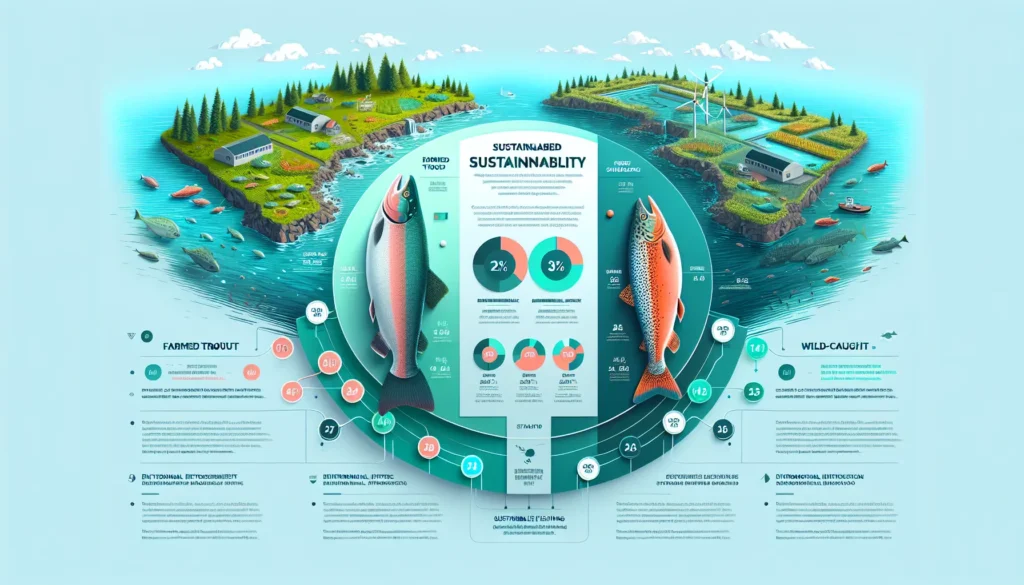
Now we arrive at a popular topic: sustainability. When considering trout and salmon, we must distinguish between farm-raised and wild-caught options. Wild-caught salmon is often considered a more sustainable option compared to farm-raised. But, farmed trout typically exhibits lower environmental impacts than farmed salmon. It’s essential to check the source of our fish, ensuring we are making choices that are not just good for us, but the planet too.
Ecological Considerations
We also need to ponder the ecological impact. Overfishing is a concern for salmon populations in some areas, while trout populations in well-managed waters seem to be less at risk. By opting for sustainable fishing practices and being informed consumers, we can enjoy our fish guilt-free, and maybe even save the ocean while we’re at it.

